Botox · 3 min read
Crooked Smile After Botox: Why It Happens and How Long It Lasts
Your smile looks lopsided in photos, or one corner of your mouth will not lift the way it used to. It feels alarming, but it has a clear cause and it is not permanent.

What you might be noticing
A smile change after Botox can look like one corner of the mouth sitting lower, a smile that pulls more to one side, a lip that feels stiff when you drink from a cup, or a cheek that does not lift as high as the other when you laugh. Some people notice it in a video before they notice it in the mirror, because the asymmetry shows most in movement.
It typically appears within the first one to two weeks after treatment, as the product reaches full effect.
Why it happens
Your smile is not one muscle. It is a group of small muscles around the mouth and cheek working together, some lifting, some pulling sideways, some drawing down. Botox placed near the mouth, along the jaw or low around the eyes sits close to several of them.
A few common situations cause a crooked smile:
- When crow's feet are treated too low on the cheek, product can reach a muscle that lifts the corner of the mouth, and the smile on that side flattens.
- When the jaw muscles are treated for clenching or slimming and product is placed too far forward, it can reach a muscle that pulls the corner of the mouth outward.
- When small doses are placed around the lips, such as a lip flip or treatment for a downturned mouth, a dose that is slightly too strong or too wide can make the lip feel stiff or uneven.
The common thread is placement relative to anatomy that varies from person to person. Faces are not symmetrical to begin with, and the muscles are not in exactly the same place on every face.
How long it lasts
Like any Botox effect, it fades as the nerve signal to the muscle recovers. Many people see it improve over several weeks, and it fully resolves as the treatment wears off. That timeline is frustrating, but it is predictable.
What can be done in the meantime
Sometimes a physician can soften the asymmetry by placing a very small dose on the opposite side to balance the two halves. That is a judgement call, not a reflex. In some cases it helps; in others it would make the mouth feel weaker overall, and waiting is the better choice.
What does not help is massage, heat or trying to exercise the muscle back. Those do not remove product from the muscle.
How to lower the risk next time
Bring up the problem at your next appointment, even if it resolved. The injector should change the plan: different points, lower doses, a more cautious approach around the mouth, or skipping a particular area entirely.
It also helps to understand what you were treating in the first place. If the real concern is a tired look or a downturned mouth, the answer is sometimes not Botox at all, but filler, skin treatments or nothing. A physician-led assessment looks at the cause before the treatment. Our guide on Botox or filler explains how to tell which problem is which.
When to seek care promptly
A cosmetic smile change on its own is not dangerous. If you have trouble swallowing, slurred speech, difficulty closing your eye, or weakness that seems to be spreading, contact a physician promptly. Those are not typical of a cosmetic effect.
Common questions
Is a crooked smile after Botox permanent?
No. It fades as the treatment wears off, usually over several weeks.
Can it be corrected sooner?
Sometimes a small balancing dose on the other side helps. It depends on which muscle is affected, so it needs an assessment.
Does this mean I should never have Botox again?
Not necessarily. It means the next plan should be different, with placement adjusted to your anatomy.
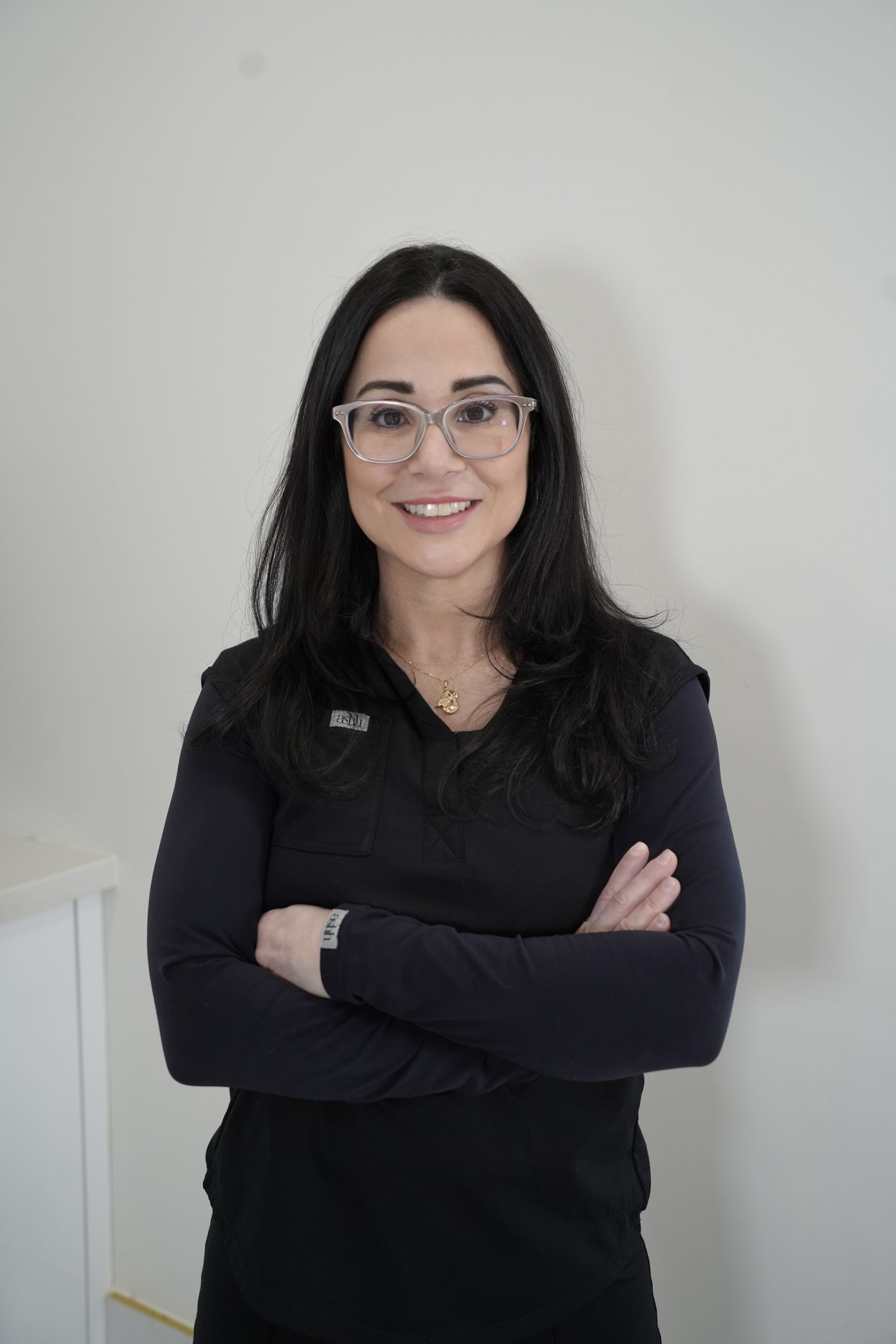
Dr. Mazzuca is a licensed physician practising medical aesthetics in Markham, Ontario, with additional training in cosmetic medicine, facial anatomy, women's health, and longevity medicine. Every treatment at the clinic is performed by her personally. Her registration can be verified through the College of Physicians and Surgeons of Ontario.
Written and medically reviewed by Dr. Monique Mazzuca, MD, CCFP. Published November 23, 2026.
This article is general information, not medical advice, and it is not a substitute for an in-person assessment. Results vary between patients, and every treatment carries risks that are reviewed with you before you consent. Suitability is determined by Dr. Mazzuca at your consultation.
More from the Journal


